
Are Bonus Buys Worth It? The EV Math
The bonus buy button sells certainty about when the feature hits, not a better outcome. We run the real expected value and risk of ruin math on buy RTP against base RTP, and show exactly when a buy beats spinning and when it just empties your bankroll faster.

Published
Quick Verdict
- RTP
- 96.5%
- Volatility
- 5
- Best for
- Gates of Olympus Super Scatter players
- Verdict
- The bonus buy button sells certainty about when the feature hits, not a better outcome. We run the real expected value and risk of ruin math on buy RTP against base RTP, and show exactly when a buy beats spinning and when it just empties your bankroll faster.
This guide is part of our Slot Guides series — covering the mechanics, math, and strategy behind modern slot design.
Best Casinos to Play Gates of Olympus Super Scatter
Top-rated casinos where you can play Gates of Olympus Super Scatter for real money.
The bonus buy button promises to skip the slow part. You pay a fixed multiple of your stake, the feature triggers right away, and you land in the round where most of the money lives. Skipping ahead and getting good value are two different things. Here is the honest expected value breakdown of what that button actually sells you.
What You Are Actually Buying
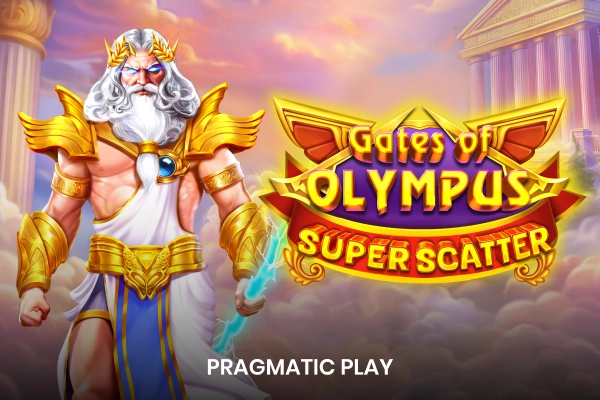
A bonus buy lets you pay a fixed price, almost always quoted as a multiple of your base stake, to trigger the bonus round immediately instead of waiting for it to arrive on its own. Costs vary more than most players expect. Gates of Olympus Super Scatter from Pragmatic Play sells its Free Spins for 100x your bet and a Super Free Spins version for 500x. Pragmatic Play sets the buy on Sanatorium Secrets at 75x for a random bonus and 150x for a guaranteed one. Hacksaw Gaming prices its FeatureSpins entries in tiers across each game.
Here is the part the button does not advertise. The bonus round carries its own RTP, and on many games that number is not the same as the headline RTP printed on the information screen. Vendors frequently publish a separate buy RTP. Sometimes it sits slightly below the base game. Sometimes it sits slightly above. That one number, the buy RTP, decides whether the purchase is mathematically smart. The advertised base game RTP has nothing to do with it.
So start there. Open the information panel and read the bonus buy RTP specifically. If a game lists 96.50% on the base game and 96.00% on the buy, you are looking at two different bets, and the button commits you to the second one.
The Core Math: One Buy, Worked Out
The expected value of a single buy is simple to calculate. You pay a cost, and on average the machine returns the buy RTP multiplied by that cost.
Expected return per buy = Buy RTP × Buy cost
Expected loss per buy = Buy cost × (1 minus Buy RTP)
Run a clean example. The numbers below are illustrative, since real figures vary by game, so always confirm them in the panel. Game: $1.00 base bet. Bonus buy costs 100x, or $100.00.
| Path to the feature | Total wagered | RTP applied | Expected return | Expected loss |
|---|---|---|---|---|
| Buy it at 100x | $100.00 | 96.00% buy RTP | $96.00 | $4.00 |
| Spin to it, 100 spins at $1.00 | $100.00 | 96.50% base RTP | $96.50 | $3.50 |
The buy costs an extra $0.50 for every $100.00 wagered. That is the 0.50% RTP gap, nothing more. Per dollar the premium is tiny. The premium is not the danger. The speed at which you wager the dollars is the danger.
Spin the game and you push $100.00 of action across one hundred button presses, and your result clusters tightly around that $3.50 average loss. Buy the feature and you stake the whole $100.00 on one outcome pulled from a distribution with a long, heavy tail. A single buy returning $0.00 to $20.00 is normal. One hundred base spins almost never total zero.
Take a real high volatility example. Our model puts about 75% of Red Rascal total RTP inside its bonus features, with a 78% dead spin rate in the base game, so the part you grind through on the way to a feature is a slow and reliable drain.
Estimated from structural data — not provider confirmed. For illustration only.
The Flip Case: When the Buy Is the Smarter Bet
One situation makes the buy a clear yes on pure math. That is when the buy RTP sits above the base RTP. Punk Rocker 3 from Nolimit City is a clean case. Its base game runs 96.04%, while the published buy reads 96.14%, so every dollar through the buy button is, on average, a slightly better bet than a dollar spun by hand. The purchase strips out the weakest base spins, and the math pays you a little to take on the extra swing.
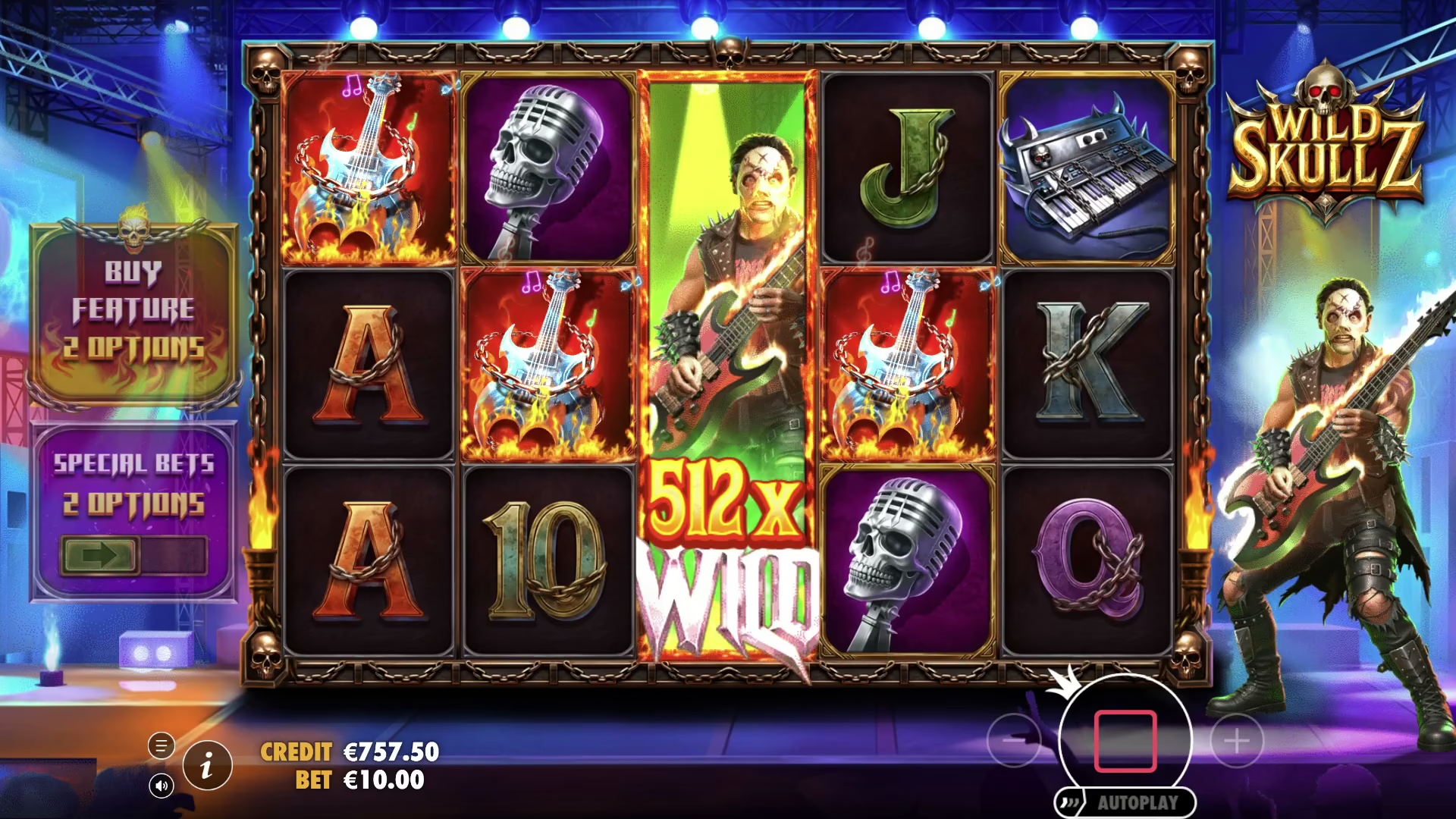
The second honest case is structural. On many insane volatility games most of the total RTP lives inside the bonus while the base game acts as a near certain slow drain. The same pattern shows up in our Wild Skullz volatility analysis and across the high volatility Hacksaw Gaming roundup. When a game is built that way, grinding the base game to earn the feature is itself a tax, and buying skips the tax in exchange for the premium and the bigger swing.
Plot the two side by side and the split is sharp. Red Rascal sells its FeatureSpins buys at 96.24% to 96.32%, every tier sitting under its 96.34% base, so the purchase is a small downgrade. Punk Rocker 3 runs the other way at 96.14% on the buy against 96.04% on the base, a small upgrade, even though both punish you with dead spin rates near 78% and 79%.
Estimated from structural data — not provider confirmed. For illustration only.
The Hidden Cost: Risk of Ruin
Most takes on this question argue about a fraction of a percent in RTP and ignore the thing that actually empties accounts, which is time to ruin on a limited bankroll.
Picture a $200.00 bankroll two ways. At $1.00 base spins you hold somewhere past 200 spins of runway, and the feature will probably trigger at least once before the money is gone, so you can walk after it lands. At $100.00 buys you get exactly two attempts. Two buys that land in the common low band, which is entirely possible given the long tail, and the session is over with no big hit and no runway left.
Same game, same long run edge. The chance of busting before variance rewards you is not even close. A buy does not make the house edge worse so much as it makes the edge arrive faster and hit harder. Run a simulated session on Punk Rocker 3, modeled at 96.04% RTP with a 79% dead spin rate and a feature roughly every 233 spins, and the drain between bonuses is steep.
Estimated from structural data — not provider confirmed. For illustration only.
The rule that falls out of this is plain. A single buy should never be a large slice of your session bankroll. If one purchase can wipe more than about 10 to 20 percent of what you brought, you do not have the depth to absorb the variance you are buying, and the math runs against you no matter what the RTP says.
The Middle Ground: Ante Bet
If you want quicker feature access without the full swing of a buy, the ante bet is the option most players overlook. Sanatorium Secrets from Pragmatic Play shows why. Its ante bet doubles your stake, lifts the feature trigger chance about fourfold, and nudges the RTP from 96.47% up to 96.53%, which is higher than the base game. You spread the extra cost across many spins instead of loading it onto one purchase, and you come out with a slightly better long run number.
For a Session Grinder, or anyone working with a modest bankroll, the ante bet usually beats the buy. You get more feature action at a far gentler swing, and on a game like Sanatorium Secrets the RTP ticks up rather than down. It is the option the buy button quietly hopes you skip.
A Simple Decision Framework
Run this in order before you tap buy.
- Read the buy RTP in the information panel, not the headline RTP.
- Compare it to the base RTP. Higher means the buy is the better bet per dollar, the way Punk Rocker 3 reads. Lower means you are paying a premium only to compress time and variance, the way every Red Rascal tier reads.
- Size it against your bankroll. One buy should sit well under about 10 to 20 percent of your session funds. If it does not, drop your stake or step away.
- Weigh the ante bet first. Same destination, far less risk of ruin, and on some games a small RTP gain.
- Match it to your style. Buys suit the High Risk player and the Feature Lover. They work against the Low Risk player and the Session Grinder. Not sure which one you are? Work through Find Your PlayerFit Archetype.
If buys suit your style, these are the newest Feature Lover games worth a look.
The Verdict
A bonus buy is not a shortcut to value. It is a tool for trading time against variance. It rarely moves the long run house edge by more than a fraction of a percent, yet it sharply shortens how long your bankroll survives and concentrates your result into single high stakes events.
Buy it when the published buy RTP matches or beats the base game, the way Punk Rocker 3 does at 96.14%, and when one buy is a small slice of your bankroll. Skip it when the buy RTP sits below the base game, the way every Red Rascal tier does, when your bankroll can only cover a few attempts, or when you are playing to stretch a session. In those cases the ante bet, or simply spinning, keeps far more of your money in play.
The button sells certainty about when the feature arrives. It does not sell a better result. Price that difference correctly and you will press it far less often, and keep more of your bankroll when you do.
Play Responsibly
Bonus buys speed up how fast you wager, which makes firm limits more important, not less. Set a budget before you play and treat every buy as money already spent. Never buy to chase a loss. If the fun stops, support is available at any hour from BeGambleAware and GamCare. 18+ only.
Tags
Andrew Mueller is the founder of SlotsOnFire and holds a B.S. in Electrical Engineering (BSEE). Since 2008, he has leveraged his analytical background to deconstruct complex slot mechanics, focusing on the mathematical integrity and algorithmic logic behind RNG systems.