


The Casino Bonus Value Formula: Which Bonuses Actually Make Mathematical Sense
Most casino bonuses are worth less than they appear and some are worth nothing at all. We run the expected value math on every major bonus type, from no wagering offers to 60x playthrough traps, and show you exactly which ones deserve your bankroll.

Published
Quick Verdict
- Verdict
- Most casino bonuses are worth less than they appear and some are worth nothing at all. We run the expected value math on every major bonus type, from no wagering offers to 60x playthrough traps, and show you exactly which ones deserve your bankroll.
This guide is part of our Bonus Math series — covering the mechanics, math, and strategy behind modern slot design.
Best Casinos to Play These Slots
Top-rated casinos recommended for the slots covered in this guide.
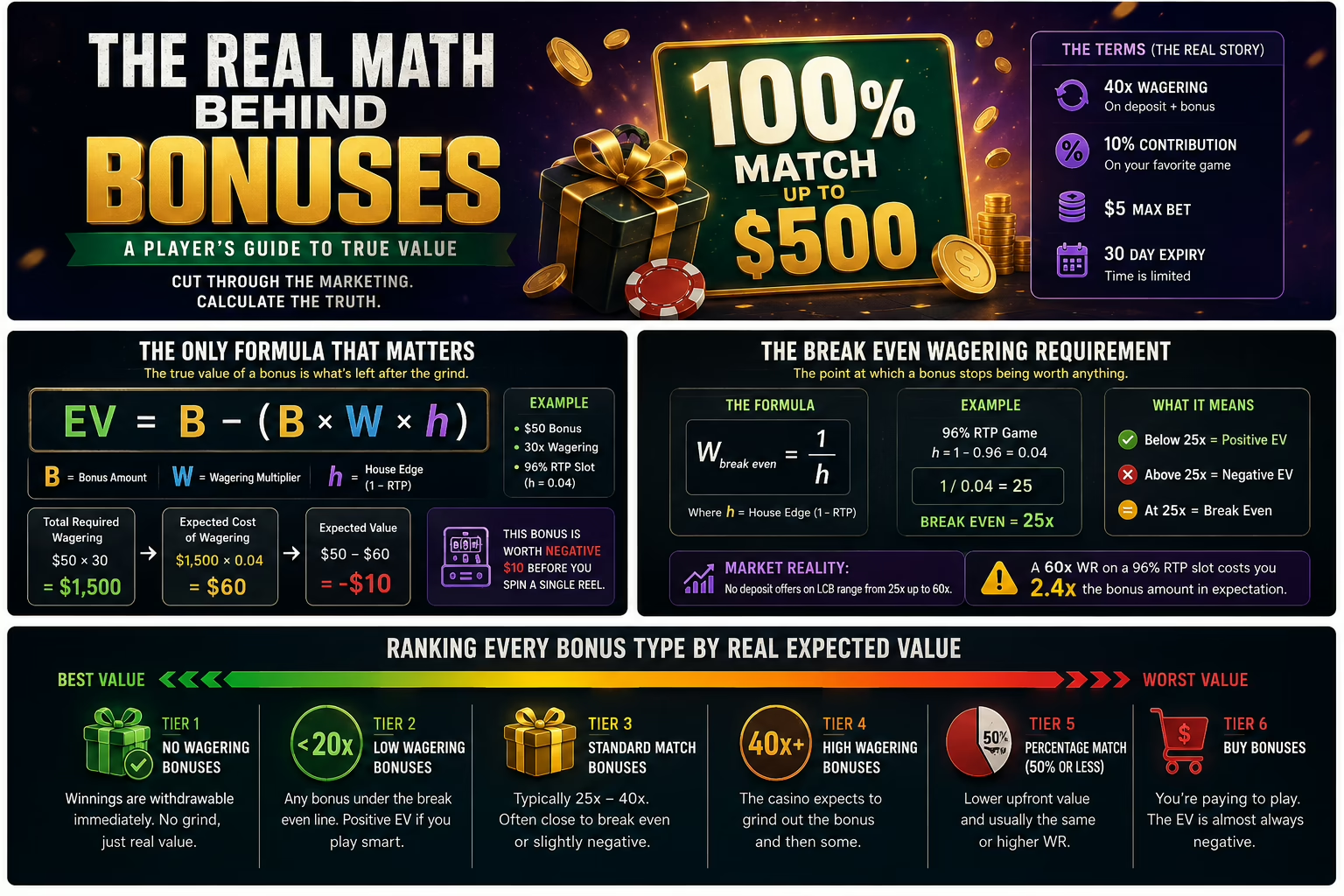
Every bonus banner is designed to make one number enormous and every other number invisible. The headline says 100 percent match up to 500 dollars. The terms say 40x wagering on deposit plus bonus, 10 percent contribution on your favorite game, a 5 dollar max bet, and a 30 day expiry. One of those numbers is marketing. The other four are math.
I built this guide to give you a single formula for cutting through all of it. By the end you will be able to look at any bonus offer, run three numbers in your head, and know whether you are looking at real value or an expensive way to lose your withdrawal rights.
The Only Formula That Matters
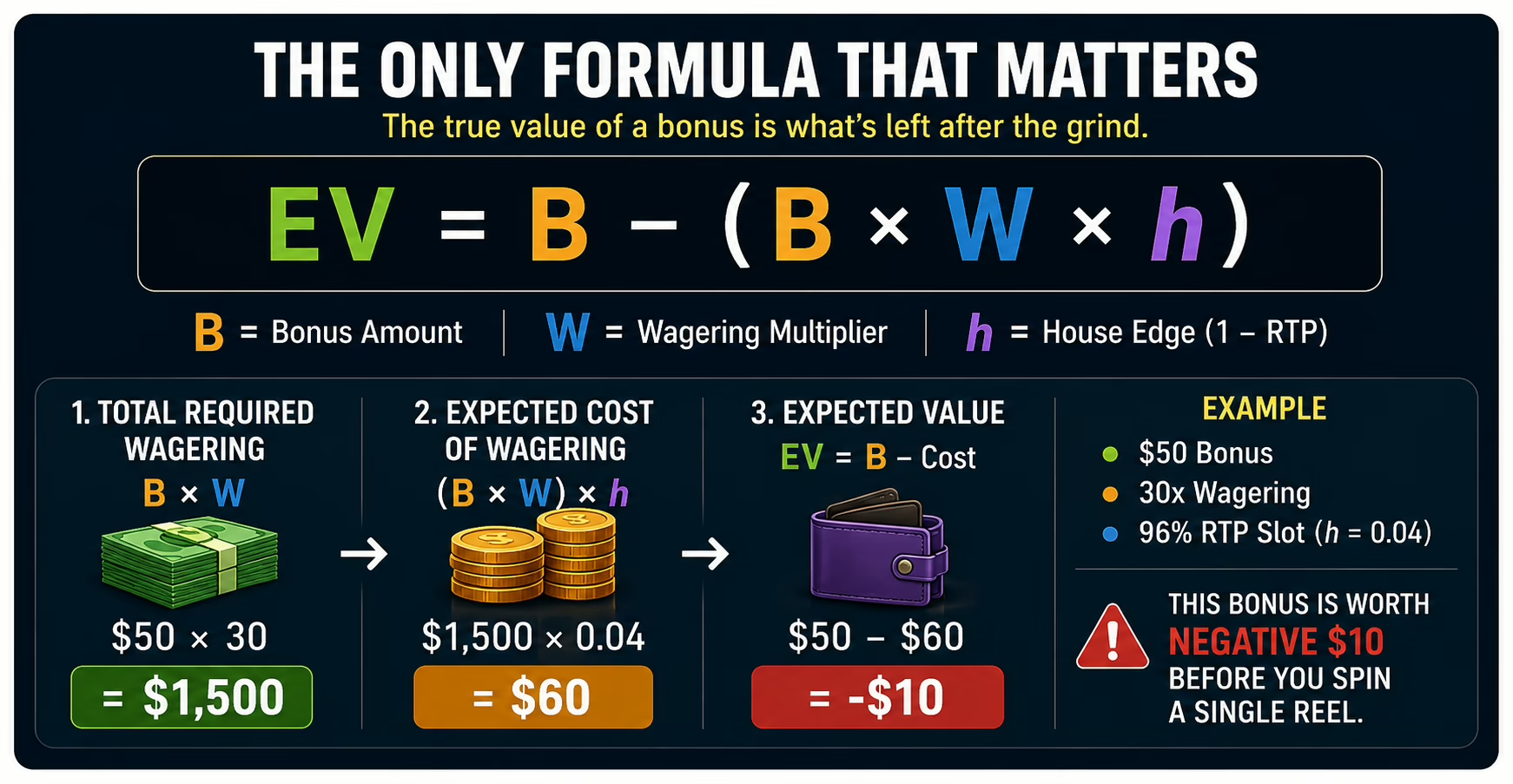
The true value of a bonus is not its face amount. It is the face amount minus what the wagering requirement will grind out of it before you are allowed to cash out. Here it is in formal terms:
where is the bonus amount, is the wagering multiplier, and is the house edge of the game you play. The house edge is just one minus the RTP expressed as a decimal:
On a 96 percent RTP slot, . Every dollar you wager through that game costs you 4 cents on average. Wagering requirements force you to feed a fixed number of dollars through that grinder before your winnings become real money.
Worked example. I claim a 50 dollar bonus with a 30x wagering requirement on the bonus amount. Total required wagering is 50 × 30 = 1,500 dollars. On a 96 percent RTP slot the expected cost of that wagering is:
Expected value:
That bonus, the one with the shiny 50 dollar headline, is worth negative 10 dollars before I spin a single reel. I would need a slot at 96.7 percent RTP or better with full wagering contribution just to break even on it. This is the calculation almost nobody runs and it is why the industry can afford to hand out free money.
The Break Even Wagering Requirement
Rearrange the formula and you get the most useful number in bonus hunting: the wagering requirement at which a bonus stops being worth anything. Set and solve for :
On a 96 percent RTP game that is , a 25x wagering requirement on the bonus amount. Below 25x, the bonus carries positive expected value. Above 25x, the casino expects to reclaim the entire bonus and then some through the grind. At exactly 25x it is a coin flip dressed up as a gift.
That 25x line is your mental anchor. Now hold it up against the real market. When I checked the LCB no deposit bonus directory while writing this, it listed 159 active no deposit offers, and the wagering requirements on the first page alone ran from 25x up to 60x on the bonus. A 60x requirement on a 96 percent RTP slot has an expected cost of times the bonus amount. You are being handed a dollar and asked to donate 2.40 for the privilege.
This is exactly why a bonus list that displays the wagering requirement next to every offer is worth more than any individual bonus on it. LCB flags the WR on each listing, which turns a marketing page into a filterable dataset. Sort by the terms, not the headline.
Ranking Every Bonus Type by Real Expected Value
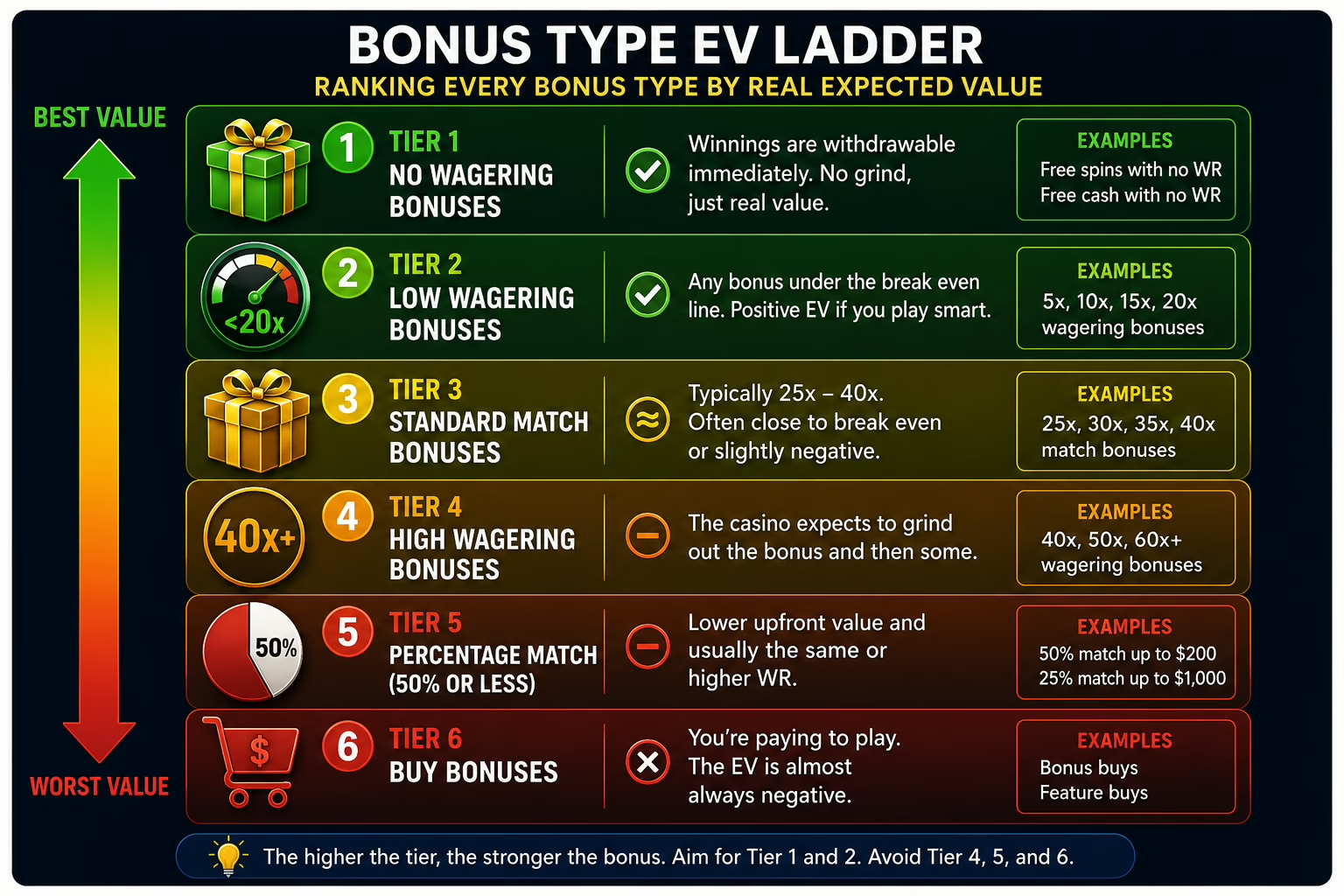
With the formula in hand, the entire bonus landscape sorts itself into a clear hierarchy. Here is every major bonus type ranked from mathematically strongest to mathematically weakest.
Tier 1: No Wagering Bonuses
A no wagering bonus is the only offer in the industry where the marketing math and the real math are the same number. Whatever you win from the spins or the cash is immediately withdrawable. The wagering multiplier is 1x or nothing at all, so the grind term vanishes and the value collapses to:
The catch is scarcity and size. No wagering offers are usually small, often 10 to 50 spins, because the casino cannot claw anything back through playthrough. Small and real beats large and imaginary. If you only ever bookmark one bonus list, make it a no wagering list. LCB maintains a dedicated no wagering directory that filters the entire market down to just these offers, which saves you from reading terms pages one at a time.
Tier 2: Low Wagering No Deposit Bonuses
A no deposit bonus costs you nothing to claim, so even a mediocre one has positive expected value in the strict sense. You cannot lose money you never deposited. The real question is whether the expected cashout justifies your time.
Run the numbers on a real listing. A 20 dollar no deposit chip at 40x bonus wagering requires 800 dollars of playthrough. At the expected grind cost is 32 dollars against a 20 dollar starting stack, which means the most likely outcome by far is busting before you complete the requirement. Your realistic equity in that bonus is a few dollars, driven entirely by the small chance you spike a big win early and coast through the wagering.
Compare that with a 30 spin offer at 25x, near the bottom of the WR range currently listed. The grind expectation and the bonus value are close to even, and any max cashout cap becomes the binding constraint rather than the wagering. Those are the no deposit offers worth your registration details. The LCB no deposit directory shows the lowest available WR directly on each casino card, so you can skip everything above your break even line without opening a single terms page. Their wagering requirements calculator will also do the total playthrough arithmetic for you if you would rather not do it by hand.
One structural note on no deposit bonuses: they are test drives, not income. Their genuine value is letting you evaluate a casino's software, game library, and cashier before your own money is ever at risk. Treat any actual cashout as a pleasant anomaly.
Tier 3: Non Sticky Deposit Bonuses
A non sticky bonus, sometimes called a parachute bonus, keeps your deposited cash and the bonus funds in separate buckets. You play with your own money first. If you win and want to withdraw, you can forfeit the untouched bonus and cash out with no wagering obligation at all. The bonus only activates if your own deposit busts.
Mathematically this is an elegant structure. The bonus functions as a free second bankroll that only exists in the losing branch of your session. Your upside scenarios carry zero wagering burden and your downside scenario gets a subsidized second chance. For volatility hunters chasing big multipliers, non sticky terms are worth more than a nominally larger sticky bonus, because the one session where you hit a 5,000x is exactly the session where sticky wagering terms would have trapped the win.
Tier 4: Standard Deposit Match Bonuses
This is the classic 100 percent match and it lives or dies entirely on two clauses in the terms.
First, is the wagering calculated on the bonus only, or on deposit plus bonus? A 35x requirement on bonus only for a 100 dollar bonus is 3,500 dollars of playthrough. The same 35x on deposit plus bonus is 7,000 dollars. Identical headline, double the grind. This single clause is the most expensive fine print in gambling.
Second, the game contribution table. Slots usually contribute 100 percent, but many casinos quietly set specific high RTP slots to 50 percent, 20 percent, or zero. Contribution scales your effective wagering directly. At 50 percent contribution your effective requirement doubles:
where is the contribution rate as a decimal. A deposit match below your 25x break even line, calculated on bonus only, with full slot contribution, is a genuinely good deal. Everything else in this tier needs the formula run on it before you deposit a cent.
Tier 5: High Wagering Traps
Anything at 50x or above on the bonus, and anything calculated on deposit plus bonus at 40x or above, is not a bonus in any meaningful mathematical sense. At 60x bonus wagering on a 96 percent RTP slot, the expected grind cost is 240 percent of the bonus value. These offers exist because the headline number recruits deposits from players who never read past it.
There is one honest use for this tier: pure entertainment extension with money you have already written off. If a 60x bonus lets you spin longer on a Friday night and you have zero intention of ever completing the wagering, the extra playtime is the product. Just never chase a withdrawal through a 60x grind expecting the math to save you. It will not.
The Five Filter Checklist
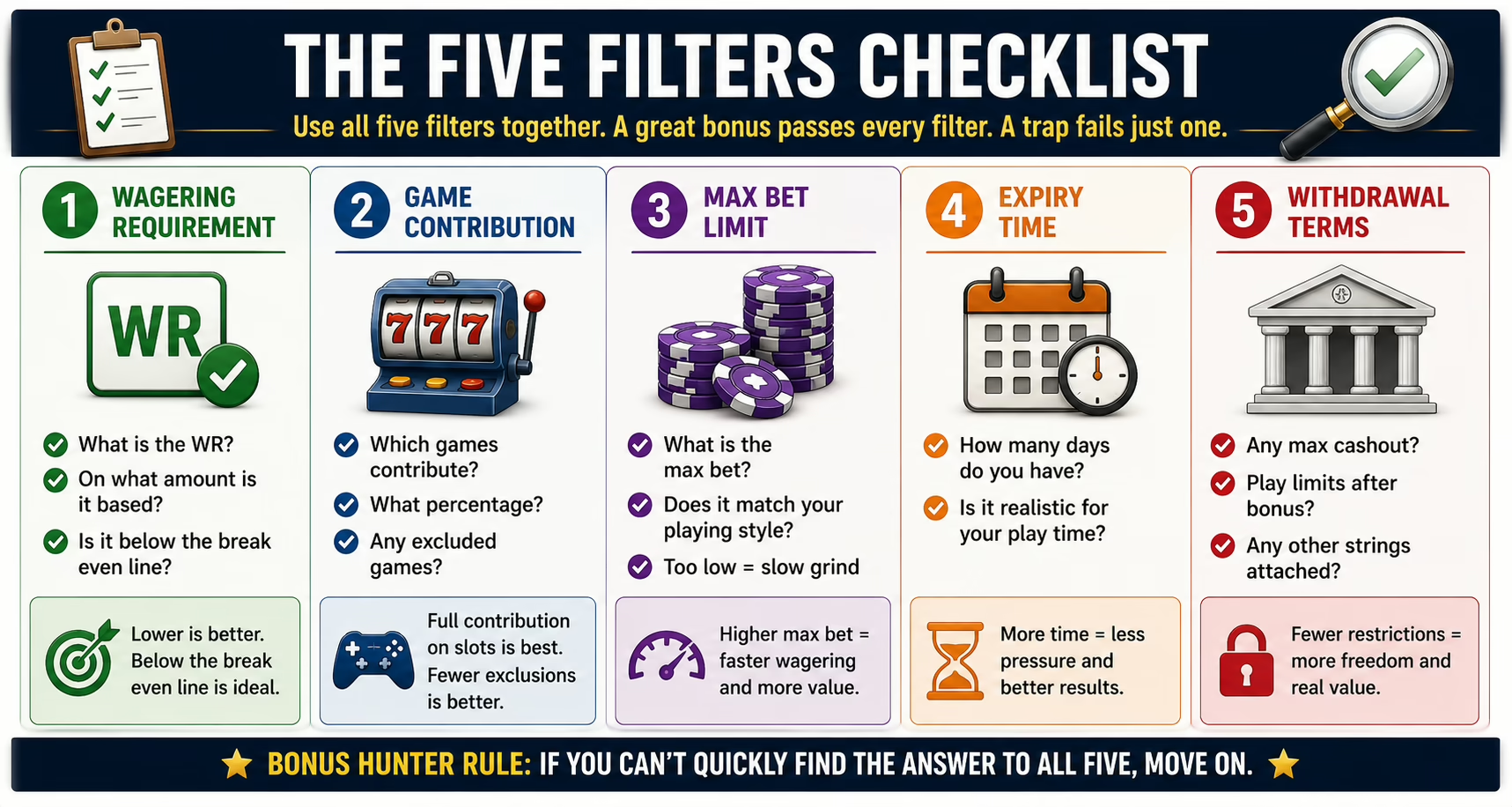
Before claiming any bonus, run these five checks in order. Any single failure moves the offer down at least one tier.
- Wagering multiplier and base. Is it on bonus only or deposit plus bonus? Multiply it out to a total dollar figure. Compare against your 25x break even anchor.
- Game contribution. Confirm the exact game you plan to play contributes 100 percent. Check the excluded games list for high RTP titles.
- Max bet clause. Most bonuses cap bets at around 5 dollars while wagering is active. Exceeding it even once voids everything. This clause kills more legitimate withdrawals than any other.
- Max cashout cap. Common on no deposit offers. A 100 dollar cap on a bonus with a 1,500 dollar wagering requirement changes the entire risk profile.
- Expiry window. Divide the total wagering requirement by your realistic daily play volume. If the answer exceeds the expiry period, the bonus is unclearable for you regardless of luck.
Where This Leaves You
The bonus market is not a minefield and it is not a goldmine. It is a spreadsheet wearing a costume. Strip the costume off with one formula and the entire landscape becomes legible: no wagering offers are real money in small amounts, low WR no deposit offers are free test drives with a lottery ticket attached, non sticky bonuses are structurally player friendly, standard matches are conditional value that the terms decide, and anything at 50x or beyond is entertainment budget in disguise.
The players who consistently extract value from bonuses are not luckier. They just refuse to claim anything they have not multiplied out first, and they source their offers from directories that put the wagering terms on the surface instead of burying them. Run the formula, check the five filters, and let the casinos hand their negative EV offers to someone else.
Play responsibly. Bonuses extend playtime, they do not change the long run direction of the math. If gambling stops being entertainment, help is available at the resources linked in our footer.
Tags
Andrew Mueller is the founder of SlotsOnFire and holds a B.S. in Electrical Engineering (BSEE). Since 2008, he has leveraged his analytical background to deconstruct complex slot mechanics, focusing on the mathematical integrity and algorithmic logic behind RNG systems.