

High Roller Bankroll Units: How Much Bankroll Do You Need Per Spin?
High Roller play is not only about bigger bets. This guide explains bankroll depth, base bet units, volatility pressure, expected loss and session risk at higher stakes.
Published
Quick Verdict
- Verdict
- High Roller play is not only about bigger bets. This guide explains bankroll depth, base bet units, volatility pressure, expected loss and session risk at higher stakes.
This guide is part of our Slot Guides series — covering the mechanics, math, and strategy behind modern slot design.
Best Casinos to Play These Slots
Top-rated casinos recommended for the slots covered in this guide.
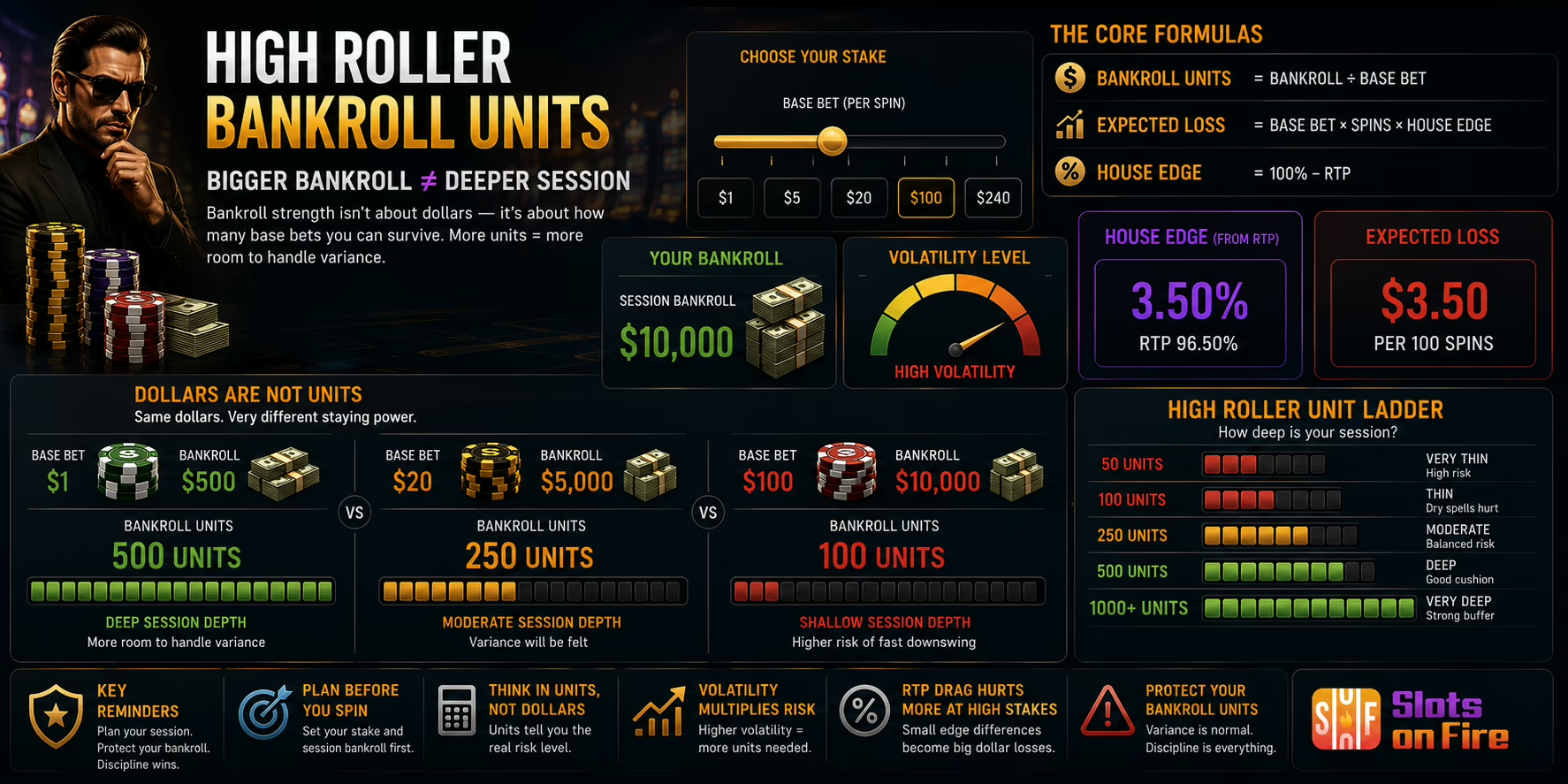
High Roller play is not only about having more money behind the session. It is about how many base bets the bankroll can support.
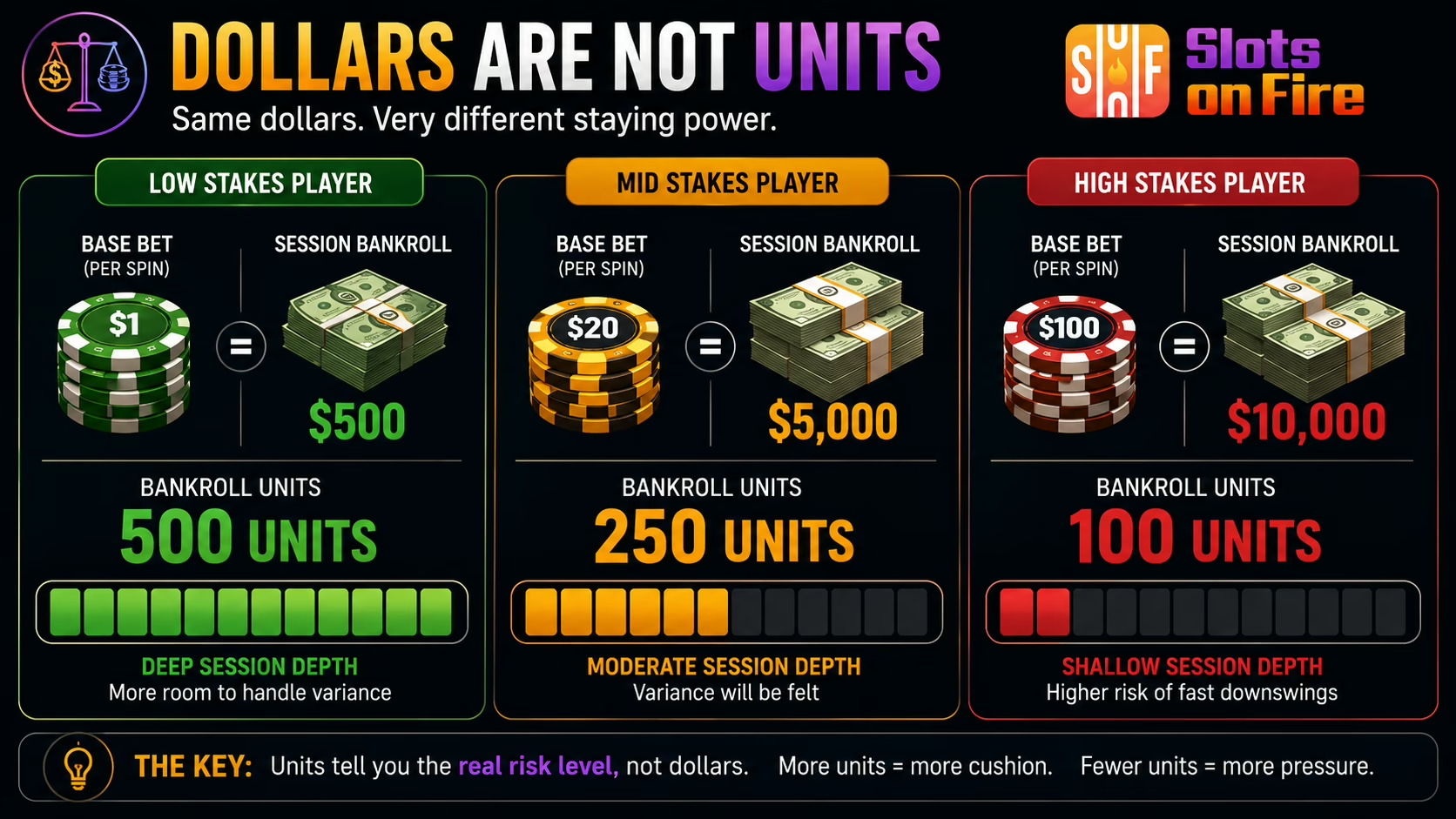
A player with a $500 bankroll at $1 per spin has 500 base bets. A player with a $10,000 bankroll at $100 per spin has 100 base bets. The second player has far more money in dollars, but much less session depth.
That is the core idea behind bankroll units. If you play bigger, the bankroll needs to grow faster than the bet size. Otherwise, the session becomes fragile.
The bankroll unit formula
The simplest High Roller bankroll formula is:
| Formula | Meaning |
|---|---|
| Bankroll units = session bankroll divided by base bet | How many full spins your bankroll can support before any wins |
| Expected loss = base bet times spins times house edge | The long run theoretical cost of the session |
| House edge = 100% minus RTP | The casino edge built into the game math |
These formulas do not predict the next session. They give you a clean way to compare risk before the session starts.
Why High Roller bankrolls can be misleading
A large bankroll in dollars can still be shallow in base bets. This is where many High Roller sessions become mathematically uncomfortable.
| Player | Base bet | Session bankroll | Bankroll units | Session depth |
|---|---|---|---|---|
| Small stake player | $1 | $500 | 500 units | Deep |
| Mid stake player | $20 | $5,000 | 250 units | Moderate |
| High stake player | $100 | $10,000 | 100 units | Thin for volatile games |
| Very high stake player | $240 | $24,000 | 100 units | Thin for volatile games |
The dollar amount alone does not tell the truth. The unit count tells you how much room the session has before variance takes over.
Expected loss at higher stakes
Expected loss is the long run mathematical cost of play. It does not mean every session will lose that exact amount. A player can win big, lose quickly or stay close to even. Over enough spins, the house edge becomes more visible.
| RTP | House edge | Bet size | Spins | Expected loss |
|---|---|---|---|---|
| 96.5% | 3.5% | $20 | 500 | $350 |
| 96.5% | 3.5% | $100 | 500 | $1,750 |
| 96.5% | 3.5% | $240 | 500 | $4,200 |
| 94.0% | 6.0% | $100 | 500 | $3,000 |
| 94.0% | 6.0% | $240 | 500 | $7,200 |
This is why RTP matters more for High Roller players. A small percentage difference becomes a large dollar difference when the stake increases.
Volatility changes how many units you need
Two games can have the same RTP and still feel completely different. The difference is volatility. Volatility controls how uneven the path is between the start of the session and the theoretical return.
| Volatility profile | Common result pattern | Bankroll unit pressure | High Roller concern |
|---|---|---|---|
| Low | Frequent small returns | Lower | Max win may feel limited |
| Medium | Balanced wins and dry stretches | Moderate | Stake size still needs control |
| High | Longer dry stretches with larger win potential | High | Thin bankrolls can disappear fast |
| Insane | Rare large wins and extended dead spin runs | Extreme | Needs deep units and strict limits |
The higher the volatility, the less useful a small unit count becomes. A 100 unit bankroll may be enough to test a low volatility game. It can be very thin for a high volatility game.
A practical High Roller unit ladder
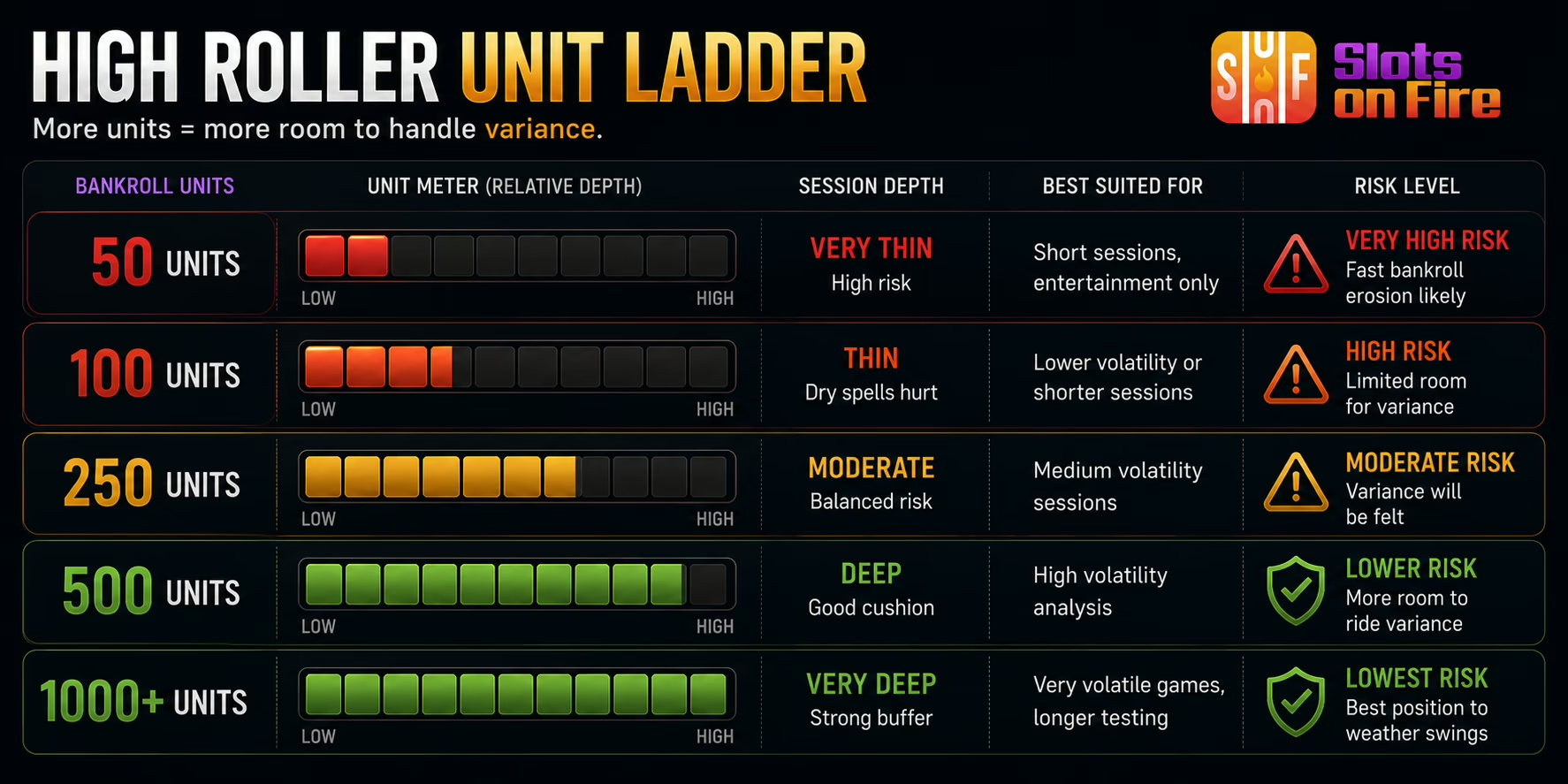
This ladder is a useful way to think about session depth. It is not a promise of safety. It is a risk lens.
| Bankroll units | Session depth | Best suited for | Risk note |
|---|---|---|---|
| 50 units | Very thin | Short entertainment session | High chance of fast loss |
| 100 units | Thin | Lower volatility or short session | Dry stretches matter quickly |
| 250 units | Moderate | Medium volatility sessions | Still exposed to poor runs |
| 500 units | Deep | High volatility analysis | More room, not protection |
| 1000 units | Very deep | Longer testing or very volatile games | Variance can still dominate |
Why hit frequency matters to High Rollers
Hit frequency tells you how often a spin returns any win. It does not tell you if the game is profitable. It does not tell you if the session will survive. It tells you how often the game interrupts the drain.
| Hit frequency | Losing spins out of 100 | What it feels like at $100 per spin |
|---|---|---|
| 35% | About 65 | Still swingy, but more frequent returns |
| 28% | About 72 | Dry stretches become noticeable |
| 24% | About 76 | Dead spin runs can get expensive quickly |
| 20% | About 80 | Very dry unless large wins arrive |
At smaller stakes, low hit frequency can feel frustrating. At higher stakes, it becomes a bankroll pressure issue. A long run of dead spins is normal in volatile games, but the dollar value of that run changes the emotional and financial experience.
High Roller session pressure examples
The same game can produce a very different session depending on stake size and unit depth.
| Base bet | Session bankroll | Units | Twenty dead spins cost | Pressure level |
|---|---|---|---|---|
| $1 | $500 | 500 | $20 | Low |
| $20 | $5,000 | 250 | $400 | Moderate |
| $100 | $10,000 | 100 | $2,000 | High |
| $240 | $24,000 | 100 | $4,800 | Very high |
This is why High Roller play should be planned before the first spin. The math can turn quickly once the bet size rises.
What a good High Roller bankroll plan includes
A good plan does not try to beat the math. It defines limits before variance starts influencing decisions.
| Decision | Good High Roller plan | Weak High Roller plan |
|---|---|---|
| Base bet | Chosen after checking unit depth | Chosen because the max bet is available |
| Session bankroll | Separated from total funds | Adjusted emotionally during play |
| Stop point | Known before the session | Changed after losses |
| Game choice | Matched to RTP and volatility | Picked only for max win |
| Bonus buys | Translated into dollar cost first | Viewed only as a multiple |
Bonus buys become different at High Roller stakes
A bonus buy is often shown as a multiple of the base bet. That can make the cost feel abstract. High Roller players should always convert it to dollars before clicking.
| Base bet | Bonus buy cost | Dollar cost | Question to ask |
|---|---|---|---|
| $5 | 100 times bet | $500 | Is this one feature worth a full session size decision? |
| $20 | 100 times bet | $2,000 | Can the bankroll handle several failed buys? |
| $100 | 100 times bet | $10,000 | Is the feature math clear enough to justify this exposure? |
| $240 | 100 times bet | $24,000 | Does the potential reward match the risk? |
The multiple may be the same at every stake. The decision is not the same.
Live High Roller examples
Use the live High Roller feed to compare how actual games handle max bet, RTP, volatility and max win. The best High Roller games are not always the most volatile games. They are the games where the risk profile still makes sense after the stake increases.
For a deeper read on a specific game, use the volatility and session charts. These help show whether the game is built around frequent small returns, rare bonus outcomes or an extreme reward tail.
Estimated from structural data — not provider confirmed. For illustration only.
Estimated from structural data — not provider confirmed. For illustration only.
High Roller bankroll checklist
| Check | Why it matters |
|---|---|
| How many base bet units do I have? | This shows real session depth |
| What is the RTP? | This controls theoretical cost |
| What is the house edge? | This shows the long run casino edge |
| What is the volatility? | This shows how uneven the results may be |
| What is the hit frequency? | This helps estimate dry spell pressure |
| What is the max win? | This shows the upper reward ceiling |
| What does one bonus buy cost in dollars? | This prevents multiples from hiding real cost |
| What is my stop point? | This keeps the session from becoming emotional |
How this connects to the High Roller PlayerFit type
The High Roller PlayerFit type starts with larger stakes and higher maximum bet options. Bankroll units explain whether that larger stake is supported by enough depth.
A player betting $100 per spin is not automatically playing with a strong High Roller profile. The real question is whether that player has the bankroll units, RTP discipline and volatility tolerance to support the decision.
That is the difference between simply betting bigger and thinking like a High Roller.
FAQ
What are bankroll units?
Bankroll units measure how many base bets are available in a session bankroll. A $10,000 bankroll at $100 per spin has 100 units.
How many units does a High Roller need?
It depends on volatility and session length. Low volatility games may feel playable with fewer units. High volatility and insane volatility games usually require much deeper unit counts.
Is 100 units enough for High Roller slots?
It can be enough for a short session or a lower volatility game. It is thin for volatile slots, especially when hit frequency is low and bonus triggers are rare.
Why does RTP matter more at high stakes?
The percentage does not change, but the dollar cost does. A lower RTP creates a larger expected loss when the stake is higher.
Should High Rollers avoid bonus buys?
Not always. They should convert the buy cost into dollars first. A 100 times buy at $100 per spin costs $10,000, which is a major bankroll decision.
Tags

PE and founder of SlotsOnFire.com with 15+ years in slot analysis.