
High Roller Slot Player Type: The Math Behind Bigger Bets
High Roller players are not defined by risk alone. This guide explains how larger stakes change RTP drag, volatility, bankroll pressure, hit frequency, max win value and session planning.

Published
Quick Verdict
- RTP
- 96.44%
- Volatility
- 5
- Best for
- Wild Skullz players
- Verdict
- High Roller players are not defined by risk alone. This guide explains how larger stakes change RTP drag, volatility, bankroll pressure, hit frequency, max win value and session planning.
This guide is part of our Probability Modeling series — covering the mechanics, math, and strategy behind modern slot design.
Best Casinos to Play Wild Skullz
Top-rated casinos where you can play Wild Skullz for real money.
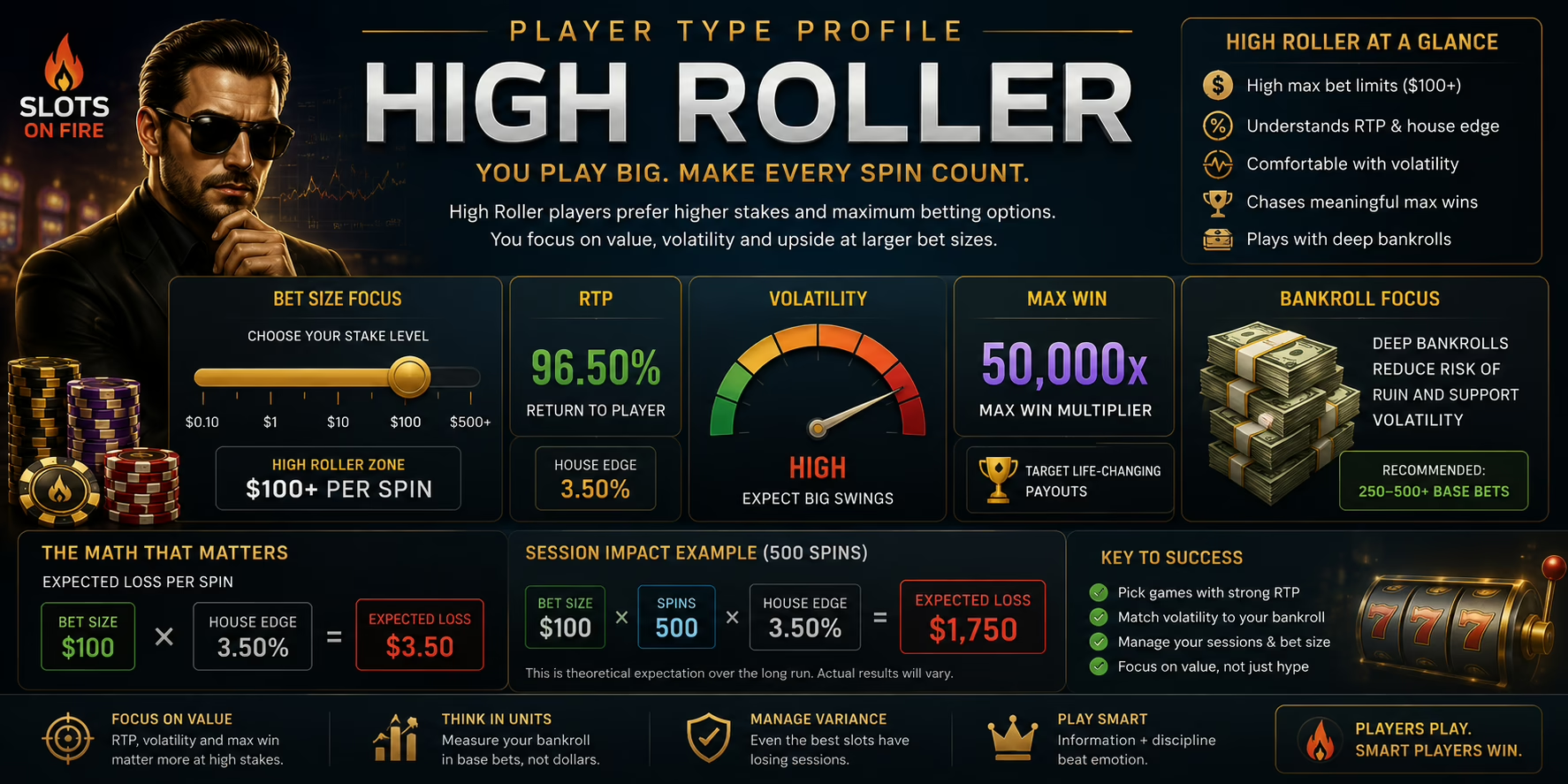
The High Roller player type is easy to misunderstand. It is not just someone who likes expensive spins. A true High Roller is a player whose slot selection changes because bet size makes every mathematical detail matter more.
At small stakes, a poor RTP game may feel like a small leak. At higher stakes, that same leak becomes a much larger dollar cost. Volatility also gets louder. A game that feels rough at $1 per spin can become financially aggressive at $50, $100 or $240 per spin.
This guide explains how to know if High Roller is your real PlayerFit type, what math matters most, and how to read a slot before increasing the stake.
What is a High Roller slot player?
A High Roller slot player cares about how a game performs at larger bet sizes. The key question is not only whether the game is fun. The key question is whether the math still makes sense when the stake is large.
A High Roller fit usually means the player looks for these traits:
- High maximum bet limits, usually $100 or more
- RTP that does not create excessive house edge drag
- Volatility that matches the bankroll size
- Max win potential that still feels meaningful at larger stakes
- Hit frequency that does not create an unrealistic dry spell pattern
- Bonus features that scale cleanly with the base bet
- Clear rules around ante bets, bonus buys and special bet modes
The most important point is this. High Roller and High Risk are not the same thing. A High Roller may prefer low volatility at large stakes. Another High Roller may chase very high volatility games with huge max win potential. The shared trait is stake size, not risk appetite.
The core High Roller formula
Every slot has a theoretical cost. That cost starts with RTP.
| Formula | Meaning |
|---|---|
| House edge = 100% minus RTP | Theoretical casino edge before short term variance |
| Expected loss per spin = bet size times house edge | The long run average cost of one spin |
| Expected loss for a session = bet size times spins times house edge | The long run average cost across a session |
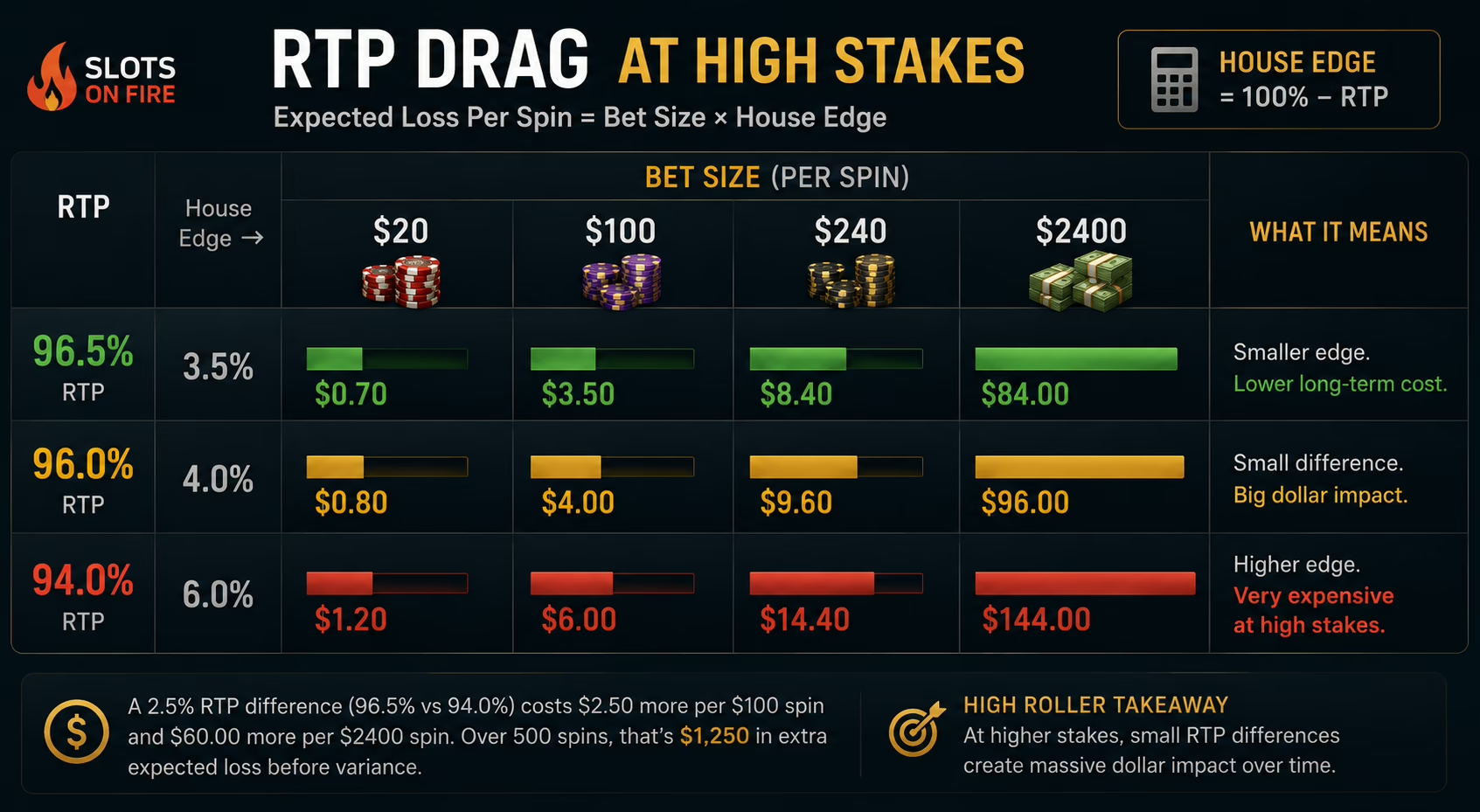
This is where High Roller math becomes different from casual play. The percentage does not change because you bet more, but the dollar amount does.
| RTP | House edge | $20 spin | $100 spin | $240 spin | $2400 spin |
|---|---|---|---|---|---|
| 96.5% | 3.5% | $0.70 | $3.50 | $8.40 | $84.00 |
| 96.0% | 4.0% | $0.80 | $4.00 | $9.60 | $96.00 |
| 94.0% | 6.0% | $1.20 | $6.00 | $14.40 | $144.00 |
A 2.5 point RTP difference between 96.5% and 94.0% may not sound dramatic. At $100 per spin, it is $2.50 more theoretical loss every spin. Over 500 spins, that is $1,250 of extra expected loss before variance is even considered.
Why bet size changes volatility
If a slot pays in bet multiples, the shape of the game does not change when the stake changes. A 100x win is still a 100x win. What changes is the dollar value of every result.
That means the average result scales with the bet. Standard deviation also scales with the bet. Variance grows with the square of the bet.
| Stake change | Expected loss change | Standard deviation change | Variance change |
|---|---|---|---|
| 2 times larger bet | 2 times larger | 2 times larger | 4 times larger |
| 5 times larger bet | 5 times larger | 5 times larger | 25 times larger |
| 10 times larger bet | 10 times larger | 10 times larger | 100 times larger |
This is why a High Roller should not evaluate a game only by the max win. The same volatility profile becomes more aggressive as the bet increases. A game with a low hit frequency, rare feature triggers and a heavy reward tail can require a much deeper bankroll at higher stakes.
High Roller is a bankroll unit problem
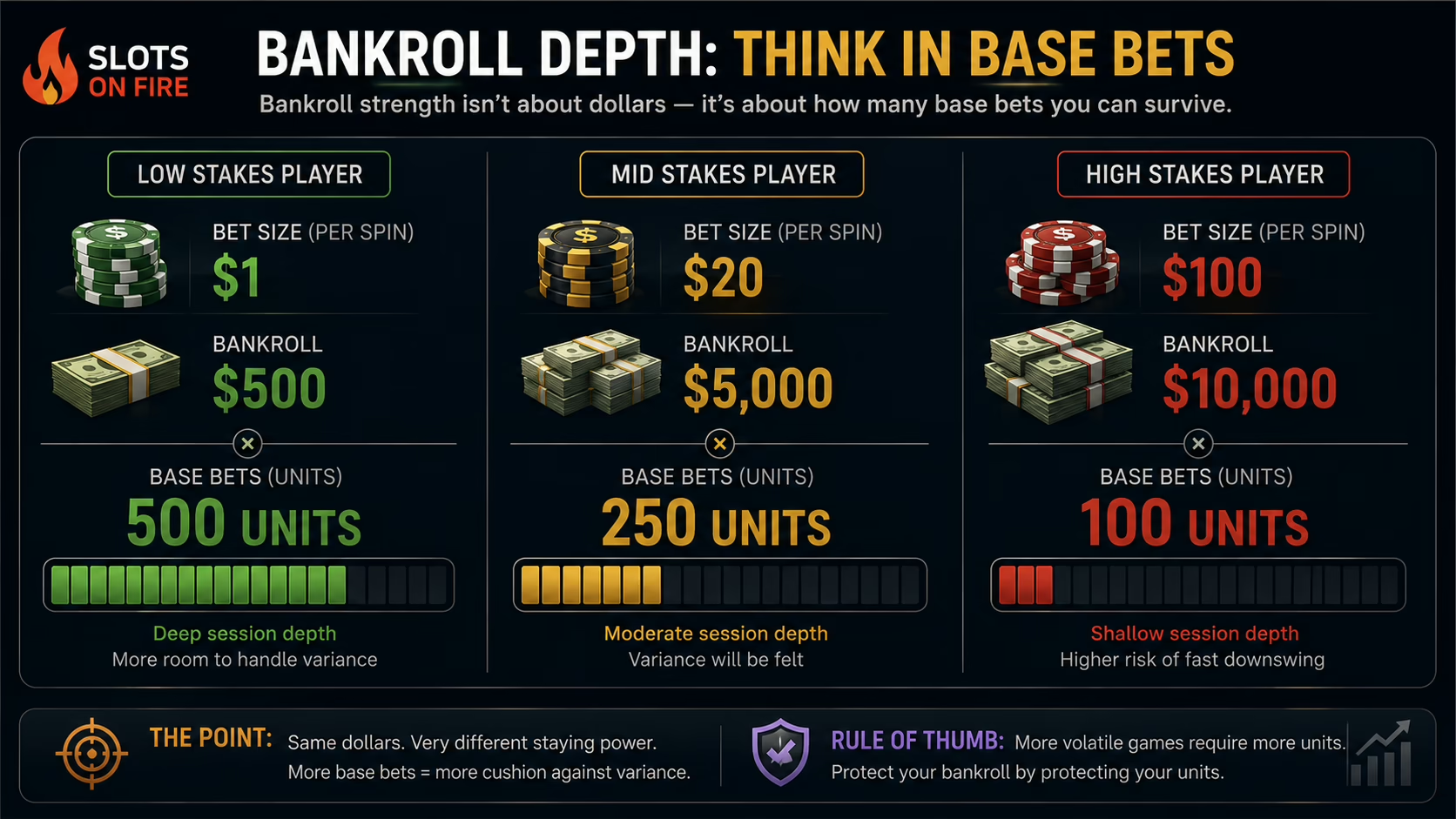
The best way to think about High Roller play is in bet units, not dollars. A player betting $1 with a $500 bankroll has 500 base bets. A player betting $100 with a $10,000 bankroll has only 100 base bets. The second player is betting more money, but has less session depth.
| Volatility level | Common session feel | Suggested bankroll depth for analysis | What it means at $100 per spin |
|---|---|---|---|
| Low | More frequent small wins | 100 to 150 base bets | $10,000 to $15,000 |
| Medium | Balanced swings | 150 to 250 base bets | $15,000 to $25,000 |
| High | Longer dry stretches | 250 to 500 base bets | $25,000 to $50,000 |
| Insane | Extreme dry stretches with rare large wins | 500 or more base bets | $50,000 or more |
This table is not a recommendation to gamble those amounts. It is a mathematical way to show why high stakes and high volatility become serious quickly. The player may have a large bankroll in dollars, but the important number is how many base bets that bankroll can survive.
Hit frequency matters more at larger stakes
Hit frequency tells you how often a spin returns any win. It does not tell you if the game is profitable. It does not tell you whether the player is ahead. It tells you how often the game interrupts the drain with some type of payout.
For a High Roller, hit frequency becomes a comfort and bankroll pressure metric.
| Hit frequency | Expected losing spins out of 100 | Session feel |
|---|---|---|
| 35% | About 65 | More frequent returns, still not safe by itself |
| 28% | About 72 | Noticeable dry stretches |
| 24% | About 76 | Long dead spin runs are normal |
| 20% | About 80 | Very dry unless large wins arrive |
A 24% hit frequency does not mean exactly 24 wins every 100 spins. Random distribution can cluster wins and losses. A player can see 20, 30 or more dead spins in a row on a volatile game. At $1, that is annoying. At $100, it is a different experience.
High Roller game selection scorecard
Use this scorecard to decide whether a slot is truly a High Roller fit.
| Factor | Strong High Roller fit | Weak High Roller fit |
|---|---|---|
| Maximum bet | $100 or higher | Low ceiling that limits larger play |
| RTP | 96% or better when available | Low RTP with no clear tradeoff |
| House edge | Small enough that stake size does not create excessive drag | Large edge that becomes expensive at high stakes |
| Volatility | Matches bankroll depth and session goal | Extreme swings without enough units behind the stake |
| Hit frequency | Clear enough to understand dry spell risk | Unknown or very low without a large bankroll plan |
| Max win | Large enough to justify the risk profile | Low ceiling paired with high volatility |
| Feature rules | Bonus buys, ante bets and special modes are clear | Feature cost is high and expected return is unclear |
Example High Roller slot profile
Wild Skullz is a useful High Roller example because it combines a very high maximum bet, strong RTP, high volatility and a clear multiplier driven reward structure. This is not a quiet session grinder profile. It is a large stake, high swing profile where bankroll depth matters.


Player fit
Player fit for Wild Skullz
Best fit: Max-Win Hunter; also High Roller, Feature Hunter.
Scores run 0–10 from the game's published stats; 5 or more counts as a fit. How player fit is scored
(Histogram Model · Logarithmic Scale)
Estimated from structural data (RTP, volatility, features, hit frequency). Not provider-confirmed. Actual distribution may vary.
The important lesson is not that every High Roller should choose this exact game. The lesson is that a High Roller should read the game through several lenses at the same time. RTP shows the theoretical drag. Volatility shows how uneven the ride can be. Hit frequency shows how often the game returns any win. Max bet shows whether the game can scale to the player. Max win shows the outer ceiling.
High Roller versus High Risk
Many High Rollers also score well as High Risk players, but the two types are different.
| Player type | Main question | Best fit |
|---|---|---|
| High Roller | Does this game scale well at larger stakes? | High max bet, acceptable RTP, clear volatility, useful max win |
| High Risk | Does this game offer large upside if I accept dry spells? | High volatility, large max win, rare but meaningful bonus outcomes |
| High Roller and High Risk | Can my bankroll support large stakes on a volatile game? | High max bet, high volatility, large bankroll depth, strict limits |
A player betting $100 on a low volatility game can be a High Roller without being High Risk. A player betting $0.20 on an insane volatility game can be High Risk without being a High Roller. The overlap happens when stake size and volatility both move higher.

✓ marks objective advantage
What types of slots fit High Rollers?
Balanced High Roller slots
These games have larger bet ranges, fair RTP and lower swing pressure. They fit players who want to play larger stakes without turning every session into a rare event chase. The max win may still be large, but the session does not depend entirely on a single extreme result.
Volatile High Roller slots
These games combine larger bets with high volatility, rare features and larger payout ceilings. They can create dramatic outcomes, but they also create more frequent losing sessions. This is where bankroll units matter most.
Feature driven High Roller slots
Some High Roller games use ante bets, bonus buys, super spins, boosted modes or feature purchase options. These can change the effective cost of each decision. A $100 base stake with a 100x bonus buy is a $10,000 feature purchase. The feature may be entertaining, but the cost is not small.
Jackpot style High Roller slots
Some games show enormous max win figures. These can look attractive to High Rollers, but the math still needs context. If the top outcome is extremely rare and the RTP is not strong, the game may be more about lottery style exposure than balanced high stake play.
How to know if you are a High Roller
You may be a High Roller if several of these statements describe how you choose slots.
- You check the maximum bet before you check the theme.
- You think in dollar exposure, not only in bet multiples.
- You compare RTP because small edge differences become large dollar differences.
- You are comfortable reading volatility and hit frequency before playing.
- You care whether a bonus buy cost is reasonable at your stake size.
- You avoid games where the max win is too low for the risk.
- You prefer games that still feel complete at larger bet sizes.
| Score | Result |
|---|---|
| 0 to 2 | High Roller is probably not your main type |
| 3 to 4 | High Roller may be a secondary type |
| 5 or more | High Roller is likely a strong PlayerFit match |
Common High Roller mistakes
Ignoring RTP because the stake is larger
This is backwards. RTP matters more as the stake increases. A weak RTP game costs more in expected dollars at larger bets.
Confusing max bet with a good High Roller game
A high maximum bet only proves that the game allows large wagers. It does not prove that the game has good RTP, suitable volatility or a worthwhile max win ceiling.
Choosing extreme volatility without enough units
A large bankroll in dollars can still be thin in base bet units. If the session bankroll is only 50 to 100 base bets, an insane volatility game can drain it quickly.
Buying bonuses without translating the cost
A 100x bonus buy at $20 is $2,000. A 100x bonus buy at $100 is $10,000. The multiple is the same, but the decision pressure is not.
Forgetting that hit frequency is not profit frequency
A hit can be smaller than the stake. Frequent wins can still lose money if many of those wins are less than 1x. Hit frequency helps describe rhythm, not value by itself.
Best shortcode blocks for this article
The High Roller article works best with live examples because the math is easier to understand when the player can see actual slot profiles.
Slot comparison
How Wild Skullz compares with Jelly Express and Candy Rush
Of these 3 slots, Candy Rush has both the highest RTP (96.58%) and the largest max win (15,000x), per published game stats.
| Game | Links | |||
|---|---|---|---|---|
Wild SkullzPragmatic Play | 96.44% | High | 10,000x | View Wild Skullz reviewPlay Demo of Wild Skullz |
Jelly ExpressPragmatic Play | 96.5% | High | 5,000x | View Jelly Express reviewPlay Demo of Jelly Express |
Candy RushPragmatic Play | 96.58%★ | Low-Medium | 15,000x★ | View Candy Rush reviewPlay Demo of Candy Rush |

marks the best value in a column. Select a column heading to sort.
Estimated from structural data — not provider confirmed. For illustration only.
Estimated from structural data — not provider confirmed. For illustration only.
High Roller quick checklist
| Check | Why it matters |
|---|---|
| RTP | Controls long run theoretical cost |
| House edge | Shows the cost side of the bet |
| Maximum bet | Shows whether the game supports high stake play |
| Volatility | Shows how uneven the outcomes may be |
| Hit frequency | Shows how often the game returns any win |
| Max win | Shows the upper payout ceiling in bet multiples |
| Bonus cost | Shows whether features become too expensive at your stake |
| Bankroll units | Shows whether the session has enough depth |
Final High Roller profile
The High Roller PlayerFit type is best understood as stake sensitive slot selection. Bigger bets do not change RTP, volatility or hit frequency as percentages. They change what those numbers mean in dollars.
A good High Roller game is not simply the game with the largest max bet. It is a game where RTP, house edge, volatility, hit frequency, max win and feature cost still make sense after the stake is raised.
If you think this way before choosing a slot, High Roller is probably one of your strongest PlayerFit types.
High Roller FAQ
Is High Roller the same as High Risk?
No. High Roller is about stake size and bet range. High Risk is about volatility and reward tail. A player can be one, both or neither.
What RTP should High Rollers look for?
A High Roller should usually prefer 96% RTP or better when available. The larger the stake, the more expensive a lower RTP becomes in expected dollars.
Does max win matter more for High Rollers?
Max win matters because it shows the top payout ceiling in bet multiples. It should be judged together with volatility, RTP and hit frequency. A huge max win with poor RTP and very low hit frequency may still be a rough fit.
Can low volatility slots be good for High Rollers?
Yes. A low volatility game with a high max bet and fair RTP can be a strong High Roller fit for players who want larger stakes without extreme swings.
How should High Rollers think about bankroll?
Use base bet units. A $10,000 bankroll at $100 per spin is 100 units. That may sound large in dollars, but it is not deep for a volatile slot.
Tags
Andrew Mueller is the founder of SlotsOnFire and holds a B.S. in Electrical Engineering (BSEE). Since 2008, he has leveraged his analytical background to deconstruct complex slot mechanics, focusing on the mathematical integrity and algorithmic logic behind RNG systems.