

The RTP Math Guide: Why High RTP Slots Deserve Your Bankroll
RTP does not predict your next spin, but it does control the long term cost of every slot you choose. This guide shows the math behind high RTP slots, how much a few percentage points really cost, and which PlayerFit types should care most.
Published
Quick Verdict
- Verdict
- RTP does not predict your next spin, but it does control the long term cost of every slot you choose. This guide shows the math behind high RTP slots, how much a few percentage points really cost, and which PlayerFit types should care most.
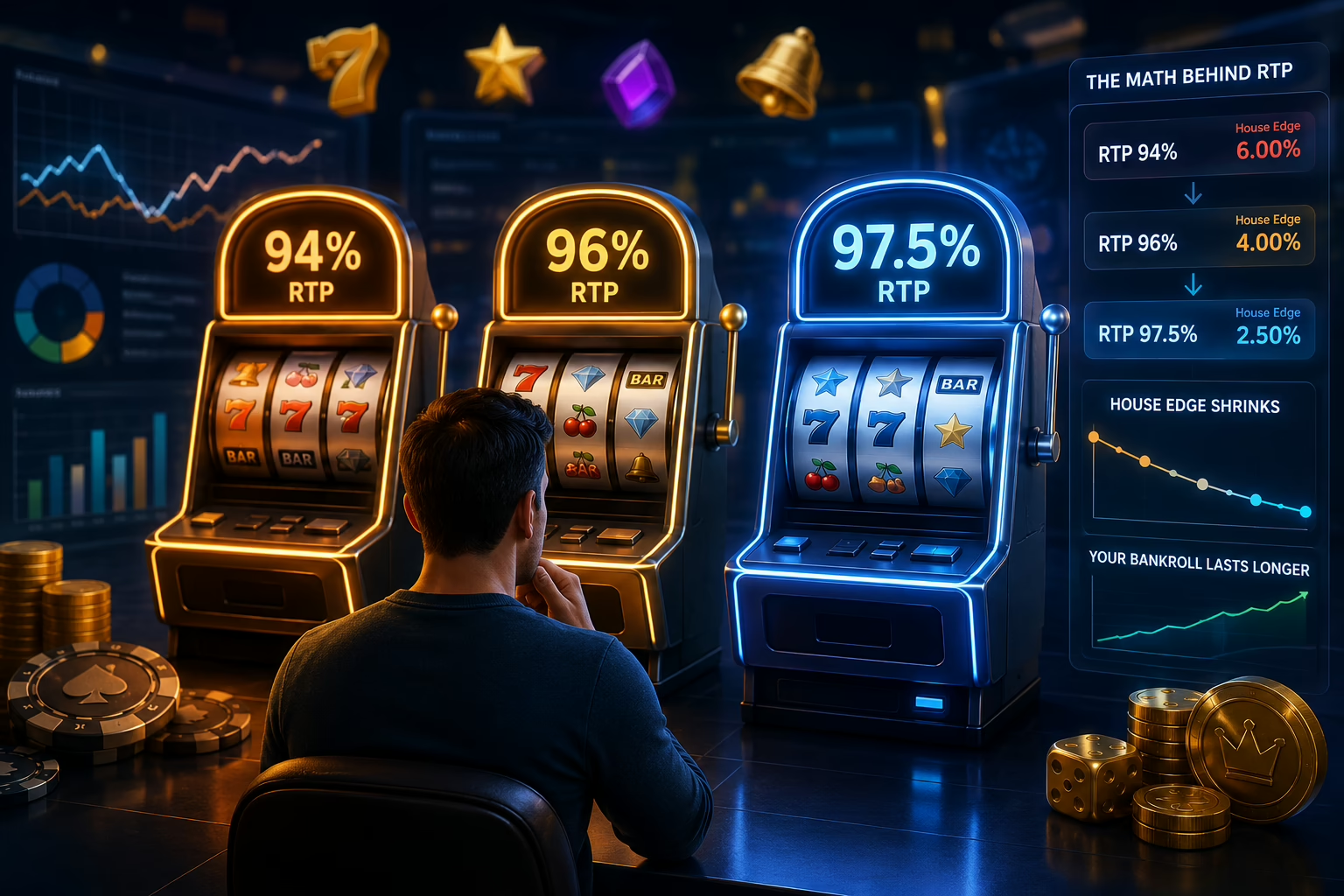
This guide is part of our Probability Modeling series — covering the mechanics, math, and strategy behind modern slot design.
Best Casinos to Play These Slots
Top-rated casinos recommended for the slots covered in this guide.
Most players look at RTP like it is a promise. A 96 percent slot feels like it should give back 96 dollars if you wager 100 dollars. That is not how a real session works.
RTP is not a forecast for tonight. It is the price tag on the game over a large amount of play. The lower the RTP, the more expensive every spin becomes. The higher the RTP, the less the casino expects to keep from the same amount wagered.
This guide is built for players who want to choose better slots without pretending the math can predict the next result. We are going to compare RTP, house edge, wagering volume, and PlayerFit type. The goal is simple. Pick games that match the way you actually play, then choose the highest RTP version of that experience whenever you can.
Quick Verdict
High RTP slots are usually the better choice because they reduce the expected cost of play. The difference can look tiny on one spin, but it becomes meaningful as wagering volume grows.
A 94 percent RTP slot has a 6 percent house edge. A 96.5 percent RTP slot has a 3.5 percent house edge. On 10,000 dollars wagered, that difference is 250 dollars in expected loss. Same bankroll. Same number of wagers. Different math.
RTP matters most for Value Seekers, Session Grinders, Low Risk players, and High Rollers. It still matters for High Risk players and Feature Lovers, but they need to pair RTP with volatility and feature structure. A high RTP slot can still be brutal if most of that return sits inside a rare bonus round.
The Only RTP Formula That Matters
RTP means return to player. It is the percentage of total wagers a slot is designed to return over a very large sample. House edge is the other side of that number.
House Edge = 100 percent minus RTP
Expected Loss = Total Wagered times House Edge
If a slot has 96 percent RTP, the house edge is 4 percent. If you wager 1,000 dollars through that game over time, the expected loss is:
1,000 times 0.04 = 40 dollars
That does not mean you will lose exactly 40 dollars. You might hit a bonus and win. You might get crushed in 10 minutes. The formula is not trying to predict one session. It is telling you the average cost of playing that math model.
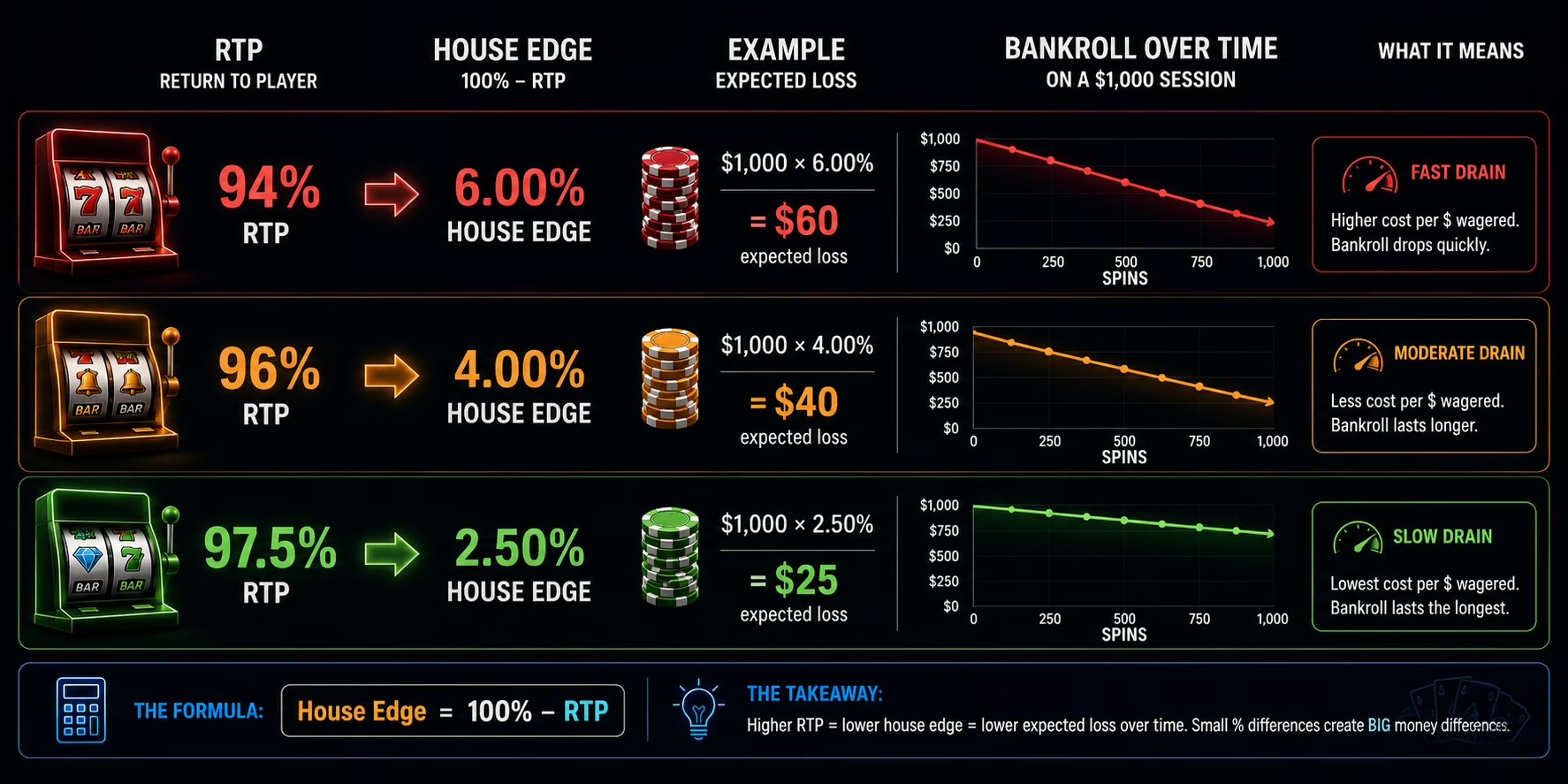
The important part is that the formula scales with volume. The more you play, the more expensive a low RTP choice becomes.
Why One Percent Is Not Small
A one percent RTP difference sounds minor because players think in spins. The casino thinks in total wagering. That is the correct way to read the number.
| Slot RTP | House Edge | Expected Loss on 1,000 Dollars Wagered | Expected Loss on 10,000 Dollars Wagered |
|---|---|---|---|
| 94 percent | 6 percent | 60 dollars | 600 dollars |
| 95 percent | 5 percent | 50 dollars | 500 dollars |
| 96 percent | 4 percent | 40 dollars | 400 dollars |
| 96.5 percent | 3.5 percent | 35 dollars | 350 dollars |
| 97 percent | 3 percent | 30 dollars | 300 dollars |
This is why RTP should not be treated like a trivia number. A player who regularly chooses 96.5 percent games over 94 percent games is not being picky. That player is cutting the expected cost of play by more than 40 percent.
The casino still has the edge. The player is simply choosing the smaller edge.
RTP Does Not Beat Volatility
RTP tells you how much a game returns over time. Volatility tells you how that return is distributed.
A low volatility slot with 96 percent RTP may return small wins often. Your balance moves down more slowly, and your session may feel steady. A high volatility slot with the same RTP may hold a large share of its return inside free spins, multipliers, or rare bonus states. If you miss those events, the game can feel much worse than the headline RTP suggests.
That is why a smart slot choice needs both numbers:
- RTP tells you the long term cost.
- Volatility tells you the ride.
- Hit frequency tells you how often the game gives something back.
- Feature RTP share tells you where the return is hiding.
Estimated from structural data — not provider confirmed. For illustration only.
An RTP stack chart helps explain why two games with similar RTP can feel completely different. If most of the return sits in the feature, the base game can drain quickly until the bonus appears. If more return sits in the base game, the same RTP may feel smoother.
Compare the Slot, Not Just the Percentage
The best RTP choice is not always the largest number in isolation. It is the best number inside the kind of game you are actually willing to play.
Slot comparison
How Le Fisherman compares with Book of Dead
Of these 2 slots, Le Fisherman has both the highest RTP (94.33%) and the largest max win (15,000x), per published game stats.
| Game | Links | |||
|---|---|---|---|---|
Le FishermanHacksaw Gaming | 94.33%★ | Low-Medium | 15,000x★ | View Le Fisherman reviewPlay Demo of Le Fisherman |
Book of DeadPlay'n GO | 94.25% | High | 5,000x | View Book of Dead reviewPlay Demo of Book of Dead |


marks the best value in a column. Select a column heading to sort.
A comparison like this is useful because RTP does not live alone. A 96.58 percent slot with extreme volatility is not the same player experience as a lower RTP game with steadier payouts. The higher RTP game has better long term math, but the session risk may be much higher.
This is where PlayerFit matters. The correct RTP target changes depending on why you play slots in the first place.
How RTP Fits Each Player Type
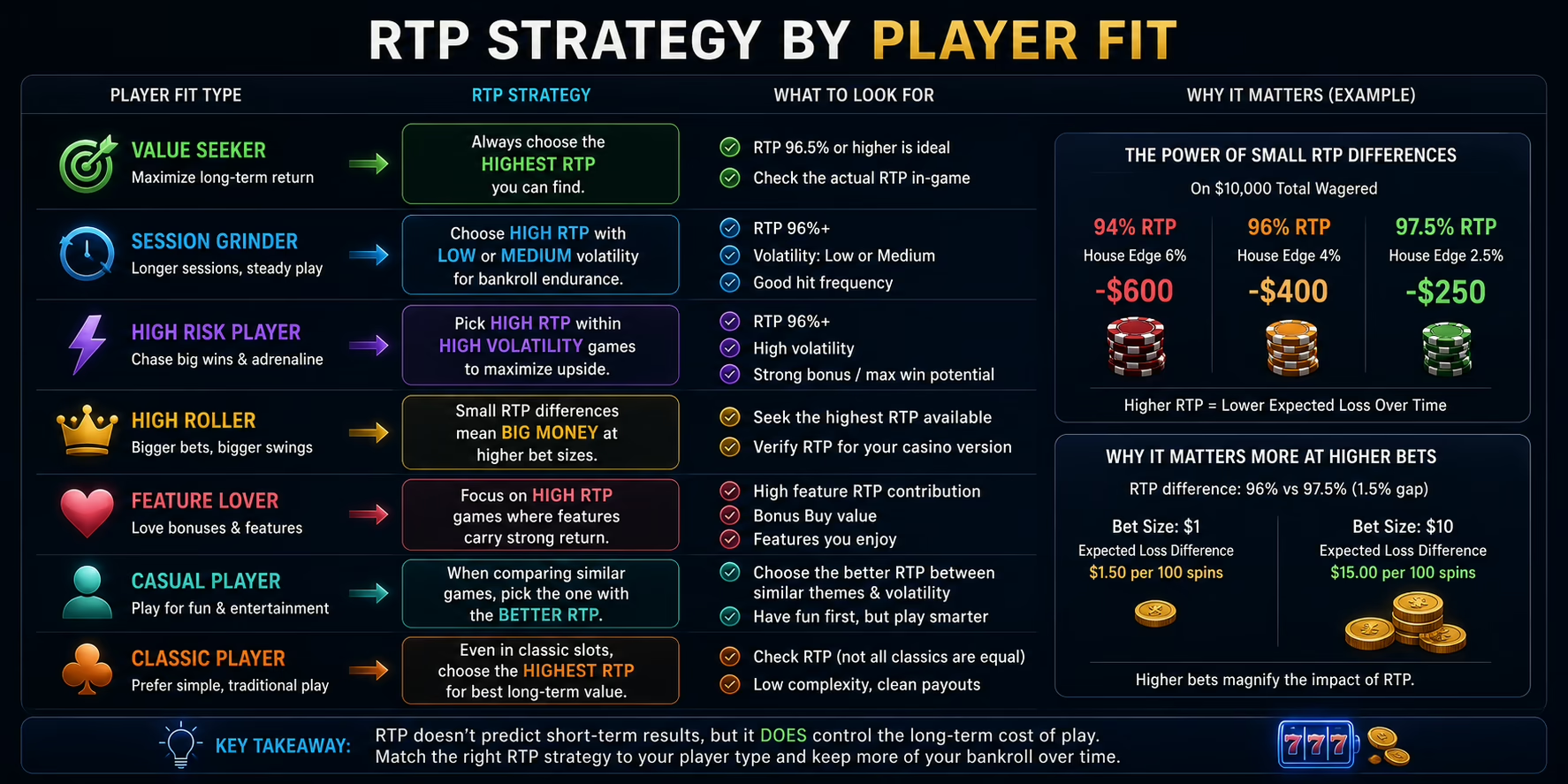
Value Seeker
Value Seekers should care about RTP more than anyone else. This is the player type that treats every game as a math decision first. If two slots are both playable, the higher RTP slot should usually win.
The clean target is 96.5 percent or better. A slot above 97 percent deserves attention, but only after checking whether the RTP is available at the casino where you plan to play. Some games have multiple RTP versions, and the number shown in one database may not match the version offered by every operator.
Session Grinder
Session Grinders should not chase high RTP alone. They want high RTP paired with low or medium volatility. This combination gives the bankroll the best chance to last longer while still keeping the expected cost down.
A 96.2 percent medium volatility slot can be a better Session Grinder choice than a 97 percent game with a brutal payout shape. The higher RTP game is cheaper over time, but it may end the session faster if the return is trapped inside rare events.
Low Risk Player
Low Risk players should use RTP as a filter after volatility. Start with games that have low or medium volatility and frequent smaller wins. Then choose the highest RTP options inside that group.
This player type should avoid confusing high RTP with safety. A high RTP game can still swing hard. For Low Risk players, the best match is a game that protects session length and also keeps the house edge reasonable.
High Risk Player
High Risk players usually care about max win, feature potential, and dramatic bonus rounds. RTP still matters, but it should be used as a tiebreaker between games with similar upside.
If two high volatility slots both offer large max wins and feature heavy math, choose the higher RTP version. You are already accepting dry spells. There is no reason to accept a larger house edge unless the lower RTP game offers a specific feature you value more.
Feature Lover
Feature Lovers should look beyond the headline RTP and ask where the return comes from. A game with many bonus modes may have a respectable RTP, but the base game can still feel thin if the features carry most of the value.
The right question is not just whether the RTP is high. The better question is whether the feature structure matches your patience. Bonus buy games, expanding symbols, cascading reels, hold features, and collect mechanics can all distribute return differently.
High Roller
High Rollers should take RTP seriously because every percentage point scales with bet size. A casual player spinning 20 cents may not feel a one percent difference quickly. A player wagering 10 dollars or 25 dollars a spin is buying that difference in larger chunks.
On 50,000 dollars wagered, the gap between 94 percent RTP and 96.5 percent RTP is 1,250 dollars in expected loss. Higher stakes make small edges expensive.
Casual Player
Casual players do not need to turn every game choice into a spreadsheet. Theme, pace, sound, and ease of play matter. RTP should still be used when the choice is close.
If you like two similar games, pick the one with better RTP. That one decision keeps the math cleaner without changing the reason you play.
Classic Player
Classic players often prefer simple reels, direct paytables, and fewer bonus layers. RTP can be easier to understand in these games because less return is hidden in complex features.
Still, classic style does not automatically mean better value. Check the actual RTP. A simple game with poor RTP is still expensive. A simple game with strong RTP can be one of the cleanest choices on the site.
The Casino Version Problem
One trap with RTP is assuming every casino runs the same version of the same slot. Some providers offer multiple RTP settings. One casino may run a game at 96 percent while another runs a lower version.
This matters because players often search the game name, see the best published RTP, and assume that is the version in front of them. The only number that matters is the one shown in the game information screen at the casino where you are playing.
For outside research, the Top 10 highest RTP slot directory is useful because it keeps the focus on payout percentage and lets players start from a list of games that are known for stronger return numbers. Use that as a research layer, then confirm the RTP inside the casino game rules before wagering.
The RTP Checklist Before You Play
- Check the actual RTP inside the game rules. Do not rely only on memory or a database listing.
- Compare the house edge. Subtract RTP from 100 percent.
- Estimate your wagering volume. A small edge becomes large once total wagers grow.
- Match RTP with volatility. High RTP does not guarantee a smooth session.
- Check feature dependence. If most return sits inside the bonus, missed features will hurt.
- Use PlayerFit. The best RTP choice for a Session Grinder may not be the best choice for a High Risk player.
- For bonus play, confirm contribution rules. Some high RTP slots may be excluded or reduced under bonus terms.
Where This Leaves You
RTP is not a magic number. It will not tell you whether the next spin wins. It will not stop a high volatility slot from going cold. It will not turn a losing session into a winning one on demand.
RTP does something more useful. It tells you what the game costs to play over time.
If you are a Value Seeker, start with the highest RTP slots and work backward from there. If you are a Session Grinder or Low Risk player, combine high RTP with steadier volatility. If you are a High Risk player or Feature Lover, use RTP to choose the best version of the kind of swingy game you already enjoy. If you are a High Roller, treat every percentage point as real money because it is.
The best slot choice is not always the game with the biggest max win, the loudest feature, or the prettiest theme. It is the game where the math, volatility, and player type all point in the same direction.
Play responsibly. RTP lowers the expected cost of play, but it does not remove the casino edge. Set limits before you play, keep gambling as entertainment, and stop when the session stops being fun.
Tags

PE and founder of SlotsOnFire.com with 15+ years in slot analysis.